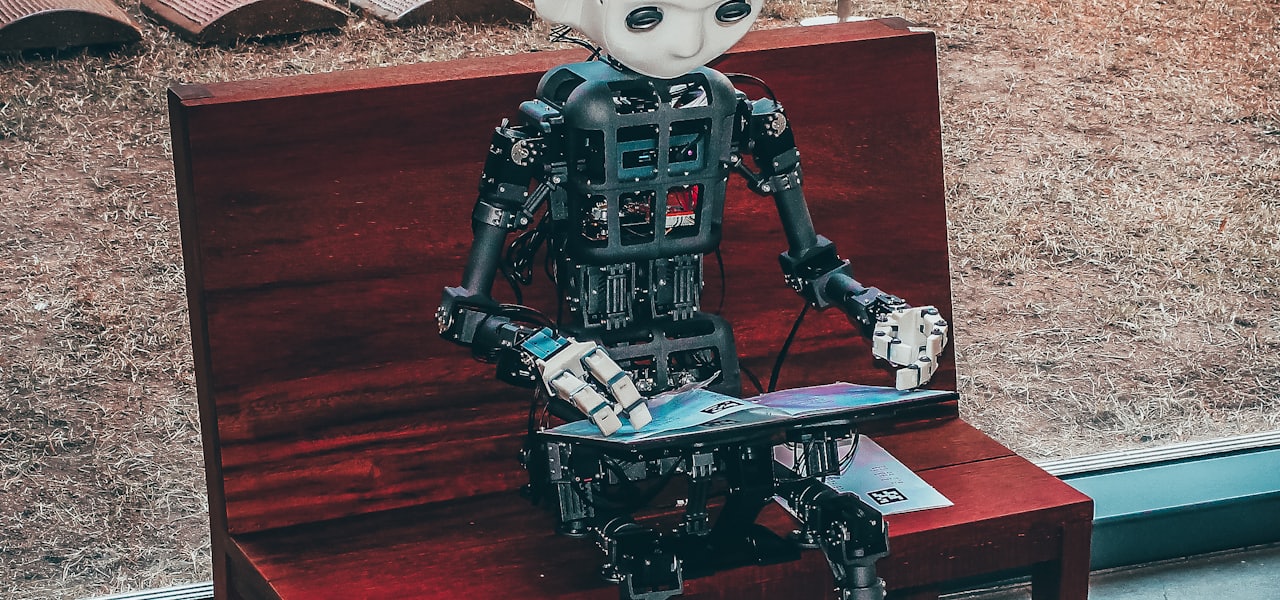
The impact of artificial intelligence on workers includes both applications to improve worker safety and health, and potential hazards that must be controlled. One potential application is using AI to eliminate hazards by removing humans from hazardous situations that involve risk of stress, overwork, or musculoskeletal injuries. Predictive analytics may also be used to identify conditions that may lead to hazards such as fatigue, repetitive strain injuries, or toxic substance exposure, leading to earlier interventions. Another is to streamline workplace safety and health workflows through automating repetitive tasks, enhancing safety training programs through virtual reality, or detecting and reporting near misses. When used in the workplace, AI also presents the possibility of new hazards. These may arise from machine learning techniques leading to unpredictable behavior and inscrutability in their decision-making, or from cybersecurity and information privacy issues. Many hazards of AI are psychosocial due to its potential to cause changes in work organization. These include increased monitoring leading to micromanagement, algorithms unintentionally or intentionally mimicking undesirable human biases, and assigning blame for machine errors to the human operator instead. AI may also lead to physical hazards in the form of human–robot collisions, and ergonomic risks of control interfaces and human–machine interactions. Hazard controls include cybersecurity and information privacy measures, communication and transparency with workers about data usage, and limitations on collaborative robots. From a workplace safety and health perspective, only "weak" or "narrow" AI that is tailored to a specific task is relevant, as there are many examples that are currently in use or expected to come into use in the near future. Certain digital technologies are predicted to result in job losses. Starting in the 2020s, the adoption of modern robotics has led to net employment growth. However, many businesses anticipate that automation, or employing robots would result in job losses in the future. This is especially true for companies in Central and Eastern Europe. Other digital technologies, such as platforms or big data, are projected to have a more neutral impact on employment. A large number of tech workers have been laid off starting in 2023; many such job cuts have been attributed to artificial intelligence. == Health and safety applications == In order for any potential AI health and safety application to be adopted, it requires acceptance by both managers and workers. For example, worker acceptance may be diminished by concerns about information privacy, or from a lack of trust and acceptance of the new technology, which may arise from inadequate transparency or training. Alternatively, managers may emphasize increases in economic productivity rather than gains in worker safety and health when implementing AI-based systems. === Eliminating hazardous tasks === AI may increase the scope of work tasks where a worker can be removed from a situation that carries risk. In a sense, while traditional automation can replace the functions of a worker's body with a robot, AI effectively replaces the functions of their brain with a computer. Hazards that can be avoided include stress, overwork, musculoskeletal injuries, and boredom. This can expand the range of affected job sectors into white-collar and service sector jobs such as in medicine, finance, and information technology. === Analytics to reduce risk === Machine learning is used for people analytics to make predictions about worker behavior to assist management decision-making, such as hiring and performance assessment. These could also be used to improve worker health. The analytics may be based on inputs such as online activities, monitoring of communications, location tracking, and voice analysis and body language analysis of filmed interviews. For example, sentiment analysis may be used to spot fatigue to prevent overwork. Decision support systems have a similar ability to be used to, for example, prevent industrial disasters or make disaster response more efficient. For manual material handling workers, predictive analytics and artificial intelligence may be used to reduce musculoskeletal injury. Traditional guidelines are based on statistical averages and are geared towards anthropometrically typical humans. The analysis of large amounts of data from wearable sensors may allow real-time, personalized calculation of ergonomic risk and fatigue management, as well as better analysis of the risk associated with specific job roles. Wearable sensors may also enable earlier intervention against exposure to toxic substances than is possible with area or breathing zone testing on a periodic basis. Furthermore, the large data sets generated could improve workplace health surveillance, risk assessment, and research. === Streamlining safety and health workflows === AI has also been used to attempt to make the workplace safety and health workflow more efficient. One example is coding of workers' compensation claims, which are submitted in a prose narrative form and must manually be assigned standardized codes. AI is being investigated to perform this task faster, more cheaply, and with fewer errors. == Hazards == There are several broad aspects of AI that may give rise to specific hazards. The risks depend on implementation rather than the mere presence of AI. Systems using sub-symbolic AI such as machine learning may behave unpredictably and are more prone to inscrutability in their decision-making. This is especially true if a situation is encountered that was not part of the AI's training dataset, and is exacerbated in environments that are less structured. Undesired behavior may also arise from flaws in the system's perception (arising either from within the software or from sensor degradation), knowledge representation and reasoning, or from software bugs. They may arise from improper training, such as a user applying the same algorithm to two problems that do not have the same requirements. Machine learning applied during the design phase may have different implications than that applied at runtime. Systems using symbolic AI are less prone to unpredictable behavior. The use of AI also increases cybersecurity risks relative to platforms that do not use AI, and information privacy concerns about collected data may pose a hazard to workers. === Psychosocial === Psychosocial hazards are those that arise from the way work is designed, organized, and managed, or its economic and social contexts, rather than arising from a physical substance or object. They cause not only psychiatric and psychological outcomes such as occupational burnout, anxiety disorders, and depression, but they can also cause physical injury or illness such as cardiovascular disease or musculoskeletal injury. Many hazards of AI are psychosocial in nature due to its potential to cause changes in work organization, in terms of increasing complexity and interaction between different organizational factors. However, psychosocial risks are often overlooked by designers of advanced manufacturing systems. Einola and Khoreva explore how different organizational groups perceive and interact with AI technologies. Their research shows that successful AI integration depends on human ownership and contextual understanding. They caution against blind technological optimism and stress the importance of tailoring AI use to specific workplace ecosystems. This perspective reinforces the need for inclusive design and transparent implementation strategies. ==== Changes in work practices ==== Over-reliance on AI tools may lead to deskilling of some professions. When AI becomes a substitute for traditional peer collaboration and mentorship, there is a risk of diminishing opportunities for interpersonal skill development and team-based learning. Increased monitoring may lead to micromanagement and thus to stress and anxiety. A perception of surveillance may also lead to stress. Controls for these include consultation with worker groups, extensive testing, and attention to introduced bias. Wearable sensors, activity trackers, and augmented reality may also lead to stress from micromanagement, both for assembly line workers and gig workers. Gig workers also lack the legal protections and rights of formal workers. Newell & Marabelli argue that AI alters power dynamics and employee autonomy, requiring a more nuanced understanding of its social and organizational implications. There is also the risk of people being forced to work at a robot's pace, or to monitor robot performance at nonstandard hours. A 2025 preprint paper based on users' interactions with the AI chatbot Microsoft Copilot identified forty jobs that the author's claimed had high overlaps with the capabilities of AI. Some media outlets used this paper to report on jobs becoming obsolete. Cri
Ampere Computing
Ampere Computing LLC is an American fabless semiconductor company that designs ARM-based central processing units (CPUs) with high core counts for use in cloud computing and data center environments. Founded in 2017 by former Intel president Renée James, the company is headquartered in Santa Clara, California, and operates as an independent subsidiary of SoftBank Group since November 2025. == History == Ampere Computing was founded in fall 2017 by Renée James, ex-President of Intel, with funding from The Carlyle Group. James acquired a team from MACOM Technology Solutions (formerly AppliedMicro) in addition to several industry hires to start the company. Ampere Computing is an ARM architecture licensee and develops its own server microprocessors. Ampere fabricates its products at TSMC. In April 2019, Ampere announced its second major investment round, including investment from Arm Holdings and Oracle Corporation. In June 2019, Nvidia announced a partnership with Ampere to bring support for Compute Unified Device Architecture (CUDA). In November 2019, Nvidia announced a reference design platform for graphics processing unit (GPU)-accelerated ARM-based servers including Ampere. In the first half of 2020, Ampere announced Ampere Altra, an 80-core processor, and Ampere Altra Max, a 128-core processor, without the use of simultaneous multithreading. In March 2020, the company announced a partnership with Oracle. In September 2020, Oracle said it would launch bare-metal and virtual machine instances in early 2021 based on Ampere Altra. In November 2020, Ampere was named one of the top 10 hottest semiconductor startups by CRN. In May 2021, the company announced a partnership with Microsoft. In April 2022, Ampere said that it had filed a confidential prospectus with the U.S. Securities and Exchange Commission, signaling its intent to go public. In June 2022, HPE announced their Gen11 ProLiant system would use Ampere Altra and Ampere Altra Max Cloud Native Processors. In July 2022, Google announced T2A instances using Ampere Altra in the Google cloud and in August 2022 Microsoft announced their instances of Ampere running in Azure. On March 19, 2025, investment holding company SoftBank Group announced it will acquire Ampere Computing for $6.5 billion. The deal finalized in November 2025, with Ampere remaining as an independent subsidiary with its headquarters in Santa Clara, California. == Products == Ampere develops ARM-based computer processors and CPU cores under their Altra brands. These are used in databases, media encoding, web services, network acceleration, mobile gaming, AI inference processing, and other applications and programs that need to scale. On February 5, 2018, Ampere announced the eMAG 8180 featuring 32x Skylark cores fabricated on TSMC's 16FF+ process. It supports a turbo of up to 3.3 GHz with a TDP of 125 W, 8ch 64-bit DDR4, up to 1 TB DDR4 per socket, and 42x PCIe 3.0 Lanes. The Skylark cores were based on AppliedMicro's X-Gene 3. Packet offers servers with the eMAG 8180 and 128 GB DRAM, 480 GB SSD, and 2x 10 Gbit/s networking. On September 19, 2018, Ampere announced the availability of a version featuring 16x Skylark cores. === 2020 === On March 3, 2020, Ampere announced the Ampere Altra featuring 80 cores fabricated on TSMC's N7 process for hyperscale computing. It was the first server-grade processor to include 80 cores and the Q80-30 conserves power by running at 161 W in use. The cores are semi-custom Arm Neoverse N1 cores with Ampere modifications. It supports a frequency of up to 3.3 GHz with TDP of 250 W, 8ch 72-bit DDR4, up to 4 TB DDR4-3200 per socket, 128x PCIe 4.0 Lanes, 1 MB L2 per core and 32 MB SLC. Ampere also announced their roadmap with Ampere Altra Max (2021) in development and AmpereOne (2022) defined. === 2021 === The 128-core Altra Max was released in 2021 and targeted hyperscale cloud providers. It uses the same server socket and platforms as Ampere Altra, and both products have one thread per core. The Altra Max CPUs provide 128 Arm v8.2+ cores per chip and run up to 3.0 GHz. They also support eight channels of DDR4-3200 memory and 128 lanes of PCIe Gen4. Also in 2021, Oracle launched its Oracle Cloud Infrastructure (OCI) using Ampere Altra processors. === 2022 === In February 2022, Ampere and Rigetti Computing announced a strategic partnership to create hybrid quantum-classical computers. The companies will combine Ampere's Altra Max CPUs with Rigetti's Quantum Processing Units (QPU) in cloud-based High-Performance Computing (HPC) environments. In April, Microsoft previewed its Azure Virtual Machines running on the Ampere Altra. The VMs run scale-out workloads, web servers, application servers, open source databases, cloud native .NET applications, Java applications, gaming servers, media servers, and other processes. In May, Ampere announced the sampling of AmpereOne CPUs, 5 nanometer chips based on its in-house Ampere-developed core. AmpereOne will add support for DDR5 main memory and PCIe Gen5 peripherals. On June 28, 2022, HPE became first tier-one server provider to offer compute with optimized cloud-native silicon for service providers and enterprises embracing cloud-native development with new line of HPE ProLiant RL Gen11 servers, using Ampere® Altra® and Ampere® Altra® Max processors, delivering high performance and power efficiency. === 2023 === During April 2023, Ampere released the Altra developer's kit, an IoT Prototype Kit based on Ampere Altra, aimed at cloud developers, available in 32-core, 64-core, and 80-core formats. === 2024 === In May 2024, Ampere updated its AmpereOne roadmap to 256 cores and announced a joint effort with Qualcomm on CPUs and accelerators. == Customers == Ampere's customers include Microsoft Azure, Tencent Cloud, Oracle, ByteDance, Hewlett Packard Enterprise (HPE), Cloudflare, Equinix, Kingsoft Cloud, Meituan, Scaleway, UCloud, Foxconn Industrial Internet, Gigabyte, Inspur, Cruise, Hetzner, Project Ronin, Wiwynn and Google Cloud Platform Cruise uses an Ampere Altra variant for its autonomous driving unit. The CPU was selected because of its throughput and low power consumption. In 2021, Oracle, Microsoft, Tencent, and ByteDance committed to using Ampere's customized chips, first announced in May. In April 2022, Microsoft previewed Ampere Altra processors in its new Azure D-and E- series virtual machines. The Dpsv5 series is built for Linux enterprise application types, and the Epsv5 series is for memory-intensive Linux workloads. They provide up to 64 vCPUs, include VM sizes with 2GiB, 4GiB, and 8GiB per vCPU memory configurations, up to 40 Gbit/s networking, and high-performance local SSD storage. In 2022, Microsoft's Ampere Altra-based Azure servers became the first cloud solution provider server to be Arm SystemReady SR certified. The Azure VMs, powered by Altra processors, were also the first to be SystemReady Virtual Environment standard certified. SystemReady defines a set of firmware and hardware standards as a baseline for system development for software developers, original equipment vendors, and chipmakers.
Social media age verification laws in the United States
In the United States, age verification laws for social media are ostensibly designed to limit young people's access to content deemed problematic such as pornography and to reduce the negative impact of social media on the mental health and well-being of children and adolescents. The purpose and effects of such laws are highly contested. Critics say that these laws suppress free speech by removing online anonymity. They have also stated the laws undermine safety, even for children, by increasing the exposure of user data to breaches, many sites require government IDs and biometric data (such as photographs), often transmitted or secured insecurely and without encryption. They also note that the measures are easily circumvented with VPNs, prompting some states such as Michigan and Wisconsin to propose legislation banning VPNs. == Laws == Many state legislatures have considered or enacted legislation pertaining to young people and social media. In 2022, California passed the California Age-Appropriate Design Code Act (AB 2273) requiring websites that are likely to be used by minors to estimate visitors' ages. On March 23, 2023, Utah Governor Spencer Cox signed SB 152 and HB 311, collectively known as the Utah Social Media Regulation Act, which requires age verification; if a user is under 18, they have to get parental consent before making an account on any social media platform. Few laws have gone into effect partially due to court challenges. === Arkansas === On April 11, 2023, Arkansas enacted SB 396, the Social Media Safety Act. The law requires certain social media companies that make over $100 million per year to verify the age of new users using a third party, and to obtain parental consent for users under 18. It excludes social media companies that allow a user to generate short video clips as well as games. The law was set to go in effect in September 2023. On June 29, 2023, NetChoice sued the Attorney General of Arkansas Tim Griffin in The Western District Court of Arkansas to block enforcement of the law, supported by the American Civil Liberties Union and the Electronic Frontier Foundation (EFF). On July 7, 2023, NetChoice filed a motion for a preliminary injunction to block enforcement of the law. On July 27, Griffin and Tony Allen filed briefs in opposition to the preliminary injunction. The preliminary injunction was granted by Judge Timothy L. Brooks on August 31, reasoning that the law was too vague, that NetChoice's members will suffer irreparable harm if the act goes into effect, and that age restrictions were ineffective. === California === ==== Digital Age Assurance Act (AB 1043) ==== On October 13, 2025, Gavin Newsom signed the Digital Age Assurance Act into law, which requires operating system providers to estimate the age of a user and into 4 age categories: Under 13 13 - 15 16 - 17 18 and over It comes into force on January 1, 2027. ==== California Age-Appropriate Design Code (AB 2273) ==== On September 15, 2022, California enacted AB 2273, the California Age-Appropriate Design Code Act. Its most controversial provisions required online services that are likely to be used by those under 18 to estimate the age of child users with a "reasonable level of certainty". It also required these services to file Data Protection Impact Assessments (DPIAs) certifying whether an online product, service, or feature could harm children, including by exposing them to (potentially) harmful content. The law does not define harmful content. Before the law took effect, EFF sent a veto request to Newsom. On December 14, 2022, NetChoice sued. On September 18, 2023, Federal Judge Beth Labson Freeman granted a preliminary injunction. The 9th Circuit on August 16, 2024, affirmed the injunction against the DPIA section of the law and sent the rest back, because the argument in the 9th circuit was mainly focused on the DPIA. ==== Protecting Our Kids from Social Media Addiction Act (SB 976) ==== On September 20, 2024, California enacted SB 976, Protecting Our Kids from Social Media Addiction. The law requires online platforms to exclude those under 18 from "addictive" feeds unless parental consent is given. It requires online platforms to not send notifications to someone under 18 between 12:00 AM and 6:00 AM without parental consent or between 8:00 am – 3:00 pm without parental consent from September through May (the law does not define what a "notification" is). The law took effect on January 1, 2025, with age verification required as of December 31, 2026. On November 12, NetChoice sued in the Northern District and before Judge Edward John Davila. On December 31, the judge blocked the sections of SB 976 that required time-of-day restrictions. He also enjoined requirements to report on the number of minor users as well as the number of parental assents to access an addictive feed. He did not block the age assurance requirement or blocking minors from seeing addictive feeds without parental consent. His reasoning was that age assurance that runs in the background does not restrict adult access to speech and that regulating feeds does not violate the first amendment because it was content neutral and did not remove any content. On January 1, 2025, NetChoice filed a motion to fully block the law as part of its appeal to the Ninth Circuit. NetChoice claimed that the court erred in its reading of Supreme Court case Moody v. NetChoice by mainly focusing on the concurring opinions and not the deciding opinion. The same day Davila decreed that California's response to NetChoice was due by 11:59 pm. California responded the same day to NetChoice's motion, claiming that the court should not block the full law, claiming that NetChoice had misread Moody v. NetChoice and that NetChoice's members would not likely face any harm from the act because members such as X (formerly Twitter) already offer their members feeds that were not personalized. On January 2, Davila granted NetChoice's motion to block the full law during the appeals process by delaying the effective date of the law from January 1, 2025, to February 1, 2025. That day NetChoice appealed the case to the Ninth Circuit Court of Appeals. === Florida === On January 5, 2024, Tyler Sirois introduced HB 1, which would ban anyone under 16 from using any social media platform and would require platforms to verify the age of users. After the bill passed, the American Civil Liberties Union (ACLU) published a blog post opposing the bill for violating the rights of minors and adults. The bill was vetoed by Governor Ron DeSantis on March 1, 2024, claiming that the State Legislature was going to enact a better alternative. HB 3 then decreased the minimum age from 16 to 14, allowing minors aged 14 and 15 to make social media accounts with parental consent. Florida enacted it on March 25, 2024, and took effect on January 1, 2025. A surge of 1,150% in VPN demand in Florida was detected after the law took effect. VPN services provide the ability to circumvent the law. On October 28, 2024, NetChoice and Computer and Communications Industry Association sued. The Judge is Chief Judge Mark E. Walker. On February 28, 2025, arguments were heard on the motion for a preliminary injunction. Walker seemed skeptical of Florida's argument that the law did not violate the first amendment and said the State would have a hard time to justify a complete ban of youth under 14 from social media. On March 13, Walker denied the motion for a preliminary injunction because the plaintiffs had not proven that at least one of their members had at least 10 percent of their users under 16 use their platform for at least 2 hours per day. Plaintiffs filed an amended complaint and a renewed motion for a preliminary injunction which was granted on June 3, for failing First Amendment Intermediate scrutiny. The injunction left in force the provision that allowed parents to request termination of their child's social media account. === Georgia === On April 23, 2024, Georgia enacted SB 351, which became Act 463. Act 463 requires platforms to verify the age of users of social media platforms and require users under 16 years of age to have parental consent before creating an account. It also requires schools to ban all social media platforms, including YouTube. Before the law was signed NetChoice sent a veto request to Kemp claiming the law was unconstitutional and was bad policy. After the bill was enacted, ACLU and NetChoice criticized the bill. NetChoice sued two months before the law's effective date. The Judge is Amy Totenberg. the suit claims that the law violates the First Amendment and Fourteenth Amendments. === Louisiana === ==== Secure Online Child Interaction and Age Limitation Act (SB 162) ==== On June 28, 2023, Louisiana enacted SB 162, the Secure Online Child Interaction and Age Limitation Act. It requires social media platforms to verify user age and get parental consent for users under 16, prohibits account holders under 1
Grid network
A grid network is a computer network consisting of a number of computer systems connected in a grid topology. In a regular grid topology, each node in the network is connected with two neighbors along one or more dimensions. If the network is one-dimensional, and the chain of nodes is connected to form a circular loop, the resulting topology is known as a ring. Network systems such as FDDI use two counter-rotating token-passing rings to achieve high reliability and performance. In general, when an n-dimensional grid network is connected circularly in more than one dimension, the resulting network topology is a torus, and the network is called "toroidal". When the number of nodes along each dimension of a toroidal network is 2, the resulting network is called a hypercube. A parallel computing cluster or multi-core processor is often connected in regular interconnection network such as a de Bruijn graph, a hypercube graph, a hypertree network, a fat tree network, a torus, or cube-connected cycles. A grid network is not the same as a grid computer or a computational grid, although the nodes in a grid network are usually computers, and grid computing requires some kind of computer network or "universal coding" to interconnect the computers.
Mediated intercultural communication
Mediated intercultural communication is digital communication between people of different cultural backgrounds. Media include social networks, blogs and conferencing services. Digital communication is distinct from traditional media, creating new avenues for intercultural communication. User take online classes; post, consume and comment on others content; and play multi-player video games. This creates spaces to form virtual communities that can ease communication across boundaries of space, time and culture. New media technologies can change culture in positive ways or become a tool of repression. == History == Intercultural communication is as ancient as human movement in search of food sources. The systematic study of intercultural communication began with Edward Hall's labor at the Foreign Service Institute, and the publication of his The Silent Language (1959). Later research, primarily focused on face-to-face communication in various areas such as interpersonal, group, and organizational and cultural identity. International and development media have been studied under the umbrella of international communication. Media imperialism, cultural imperialism and dependency theories inform this research. Mediated intercultural communication examines the bidirectional relationships between media and intercultural communication.
NNDB
The Notable Names Database (NNDB) is an online database of biographical details of over 40,000 people. Soylent Communications, a sole proprietorship that also hosted the later defunct Rotten.com, describes NNDB as an "intelligence aggregator" of noteworthy persons, highlighting their interpersonal connections. The Rotten.com domain was registered in 1996 by former Apple and Netscape software engineer Thomas E. Dell, who was also known by his internet alias, "Soylent". == Entries == Each entry has an executive summary followed by a brief narrative about their life. It also lists date and cause of death if deceased. Businesspeople and government officials are listed with chronologies of their posts, positions, and board memberships. As of 2022, the site is no longer updated. == NNDB Mapper == The NNDB Mapper, a visual tool for exploring connections between people, was made available in May 2008. It required Adobe Flash 7.
IBM Retail Store Systems
This article describes IBM point of sale equipment from 1973 with the introduction of the IBM 3650 till 1986 with the introduction of the IBM 4680. IBM continued to announced new retail products until the sale of the IBM Retail Store Solutions business to Toshiba TEC, announced on 17 April 17 2012. == Background == IBM began selling retail point of sale systems starting in 1973 with the IBM 3650 Retail Store System aimed at department and chain stores and the IBM 3660 Supermarket System designed for supermarkets. The IBM 3650 was announced alongside other IBM vertical industry systems such as the IBM 3600 Finance Communication System, and the IBM 3790 communications system, the combination of which IBM described as a "revolution in terminal based systems". All of these systems relied on a significant number of developments across IBM: New chips: Large Scale Integration allowed advanced Field Effect Transistor logic chips that packed far more transistors onto a new metalized one-inch square ceramic substrate Gas panels: Developed as an alternative to cathode ray tubes, the neon argon gas panel provided clear and flicker-free images. Modem communications: Synchronous Data Link Control provided lower-cost communications over telephone lines New disks: The "Gulliver" disk file that supplied a hard drive smaller than three cubic feet and also the "Igar" diskette drive Smaller printers: A disk printer system called "spica" that used a rotating disk print element with engraved print elements that are struck by a single hammer as the disk rotates Belt printers: A new system, known as "Lynx," using a removable belt that was significantly cheaper, quieter and simpler than earlier chain printers Keyboards: New keyboard technology called "Calico" that could build a wide variety of keyboards using common manufacturing facilities Power supplies: Transistorised Switching Regulators or TsRs: compact power supplies that are one third to one-fourth the size of previous generations === Store Loop (SLOOP) architecture === The 36xx retail terminals are connected to the store controller via a loop also called a Store Loop, similar to that used by the IBM 3600 Finance System. If a terminal detects an error, it runs a self-diagnosis routine, displays an error code to the operator, and uses bypass circuitry to remove itself from the loop and allow the loop to continue operating. If the loop fails, the most downstream terminal transmits an error code to the controller. Intermittent errors are written to disk on the store controller. === Supplies Manufacturing === While IBM's Data Processing Division created the retail store systems, it's Information Record Division (IRD) also saw signifiant opportunity in manufacturing supplies for retail systems. As an example in their Dayton NJ plant they used a high-speed Webtron press to create up to 1 million magnet merchandise tags per shift. == IBM 3650 Retail Store System == The 3650 System is a family of products designed to computerise a retail store, both at the point of sale and for back office store management functions. It includes a method to generate encoded tickets for merchandise, rather than use the Universal Product Code (UPC). The key devices for the system were as follows: === Shop Floor === ==== 3653 Point of Sale Terminal ==== Designed for the store floor, it is a loop attached device with: a wire matrix printer with 3 stations: cash receipt, sales-check and transaction journal. a keyboard with 10 numeric keys and 19 function keys an 8 digit display and description lights. in addition to the 8 digits it also displays the following characters: "$", "." and "-" operator guidance panel with 20 backlit captions status indicators a cash drawer a check verification station. Options include a wand magnet label reader with a 4 foot flexible cord, and locks for the journal tape and the till cover. The terminal effectively loads its software remotely from the 3651 over the loop, which IBM calls an IML (initial microcode load). It can also be IMLed locally using a tape cassette recorder. IBM later offered a choice of OEM Wand Attachments that could be ordered by RPQ that could use OCR or scan UPCs, instead of a wand magnet label reader. Only one wand could be attached to a specific 3653. There are two models: Model 1, which is not programmable. Was announced 10 August 1973. Model P1, which is customer programmable. Has 36 KB of storage expandable to 60 KB. Was announced 13 October 1978. === Back office equipment === ==== 3651 Store Controller ==== Controls data flow inside either a single store or multiple stores and sends retail transactions to a mainframe using a modem. For point of sale it performed functions such as: Automatic price lookup from a master price file Automatic distribution of net sales by up to 54 departments Automatic application of applicable discounts and sales taxes Automatic control of food stamp maximums Check authorization facilities For back office it also helped report preparation such as: store summary individual cashier performance store office reconciliation sales by up to 54 departments Current inquiries for department sales; cashier performance & cash position; store cash position. Inquiries and changes to the master price records and operator authorization control records. Setting the time and date for the internal clock. Running the customer checkouts in training mode. Printing of messages received from the host mainframe Entry of messages to send to the host mainframe Reporting of customer stock returns Updating the system with data received from the mainframe Preparing shelf Labels Basic features include: Each loop attaches up to 63 or 64 terminals depending on traffic volumes and desired response times Has an error and operator panel. There were many models including: A25 Has a 5 MB internal disk. Has 60K of memory expandable to 76KB. Supports one store loop. Attaches to 3275, 3653 and 3663. Announced 19 May 1978, withdrawn 19 February 1981 B25 Same as a A25 with a 9.2 MB internal disk. Announced 19 May 1978 C25 Announced 15 May 1981, withdrawn 15 December 1987 A50 Has a 5 MB internal disk. Announced 5 May 1975. Announced 10 August 1973, withdrawn 15 December 1987 B50 Same as B50 with a 9.2 MB internal disk. Announced 5 May 1975, withdrawn 15 December 1987 A60 Has a 5 MB internal disk. Has an integrated 3669. Attaches up to 24 3663 terminals. Announced 11 October 1973, withdrawn 15 December 1987 B60 Same as A60 with a 9.3 MB internal disk. Announced 17 November 1975, withdrawn 15 December 1987 A75 Has 5 MB internal disk. Has 60K of memory expandable to 124KB. Supports one to three store loops. Attaches to 3275, 3653, 3657, 3784 and 3663 terminals. Announced 19 May 1978 B75 Same as A75 with 9.3 MB internal disk. Announced 19 May 1978, withdrawn 15 December 1987 C75 Same as A75 with 18.6 MB internal disk. Announced 19 May 1978, withdrawn 15 December 1987 D75 Same as A75 with 27.9 MB internal disk. Announced 19 May 1978, withdrawn 15 December 1987 There were also two additional models that could be used instead of the 3651: 7480 Model 1: Has a 18.6 MB internal disk 7480 Model 2: Has a 27.9 MB internal disk ==== 3872 Modem ==== Used to attach to a 3659 for remote loops. Each 3872 can attach three 3659s. ==== 3659 Remote Communication Unit ==== Connected to an IBM 3872 and provides a remote loop for up to 64 point of sale terminals. Announced 10 August 1973, withdrawn 15 December 1987 (Model 2, announced 17 March 1976, withdrawn 20 December 1982) Intended to be used in a back office location like the store manager's office or the data entry office ==== 3275-3 Display Station ==== It is a loop attached display terminal with printer attachment hardware ==== 3784 Line Printer ==== A belt printer for higher-volume end-of-day reporting. The maximum print speed is 155 Ipm using a 48 character set. ==== 3657 Ticket Unit ==== Used to print tickets and encoded labels to attach to store merchandise. It is a loop attached device. It prints the following: 1" by 1" adhesive backed labels with up to 11 characters at 500 tickets per minute. IBM sold these in rolls of 9000 1" x 2" tickets with up to 42 encoded characters and two lines of print of up to 21 characters at 250 tickets per minute. IBM sold these in rolls of 2800 1" x 3" tickets with up to 79 encoded characters and two lines of print of up to 32 characters at 167 tickets per minute. IBM sold these in rolls of 1900 It can also batch read the tickets for validation, separating good tickets from bad ones into two cartridges. Announced 10 August 1973, withdrawn 15 December 1987 ==== 7481 Data Storage Unit ==== This optional unit is used to record transaction data and initialize terminals if the store controller is not available. It uses a built in tape drive to store this data. === Early deployments === The first customer installation of a 3650 was at a Dillard's department store in Little Rock, Arkansas, in late 1974. They placed arou